
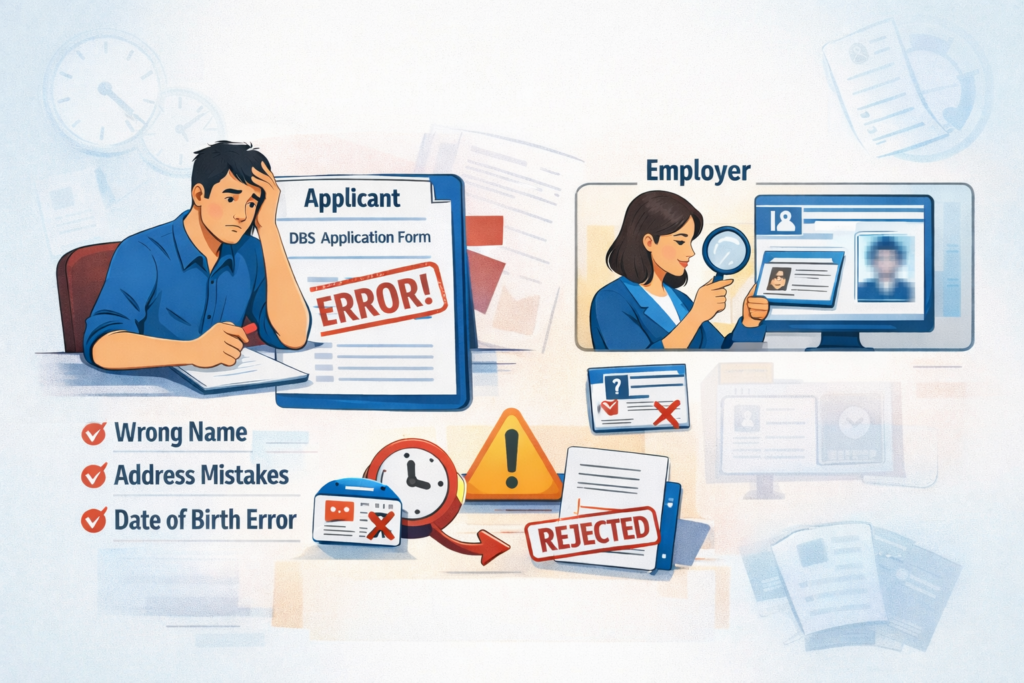
Common Human Errors in DBS Applications and How to Avoid Them
Contents
- Introduction
- 1. Why Human Error Matters in DBS Checks
- 2. Common Applicant Mistakes
- 3. Employer Errors
- 4. Consequences of Errors in DBS Applications
- 5. Step-by-Step Guide to Avoid Human Errors
- 6. What to Do if a Mistake Happens
- 7. Real-Life Examples of Human Error in DBS Checks
- 8. Final Thoughts
Introduction
Applying for a DBS check can feel overwhelming, especially if it’s your first time. Many applicants focus on their criminal history, but the reality is that human error is the leading cause of delays and inaccuracies in DBS checks. From typos in personal information to employer oversight, small mistakes can result in weeks of unnecessary waiting, frustration, or even incorrect results.
In this comprehensive guide, we’ll explore common human errors in DBS applications, their consequences, and provide practical, step-by-step advice to help you complete your check accurately and efficiently. Whether you’re applying for a first job, a volunteer role, or moving between positions, understanding these pitfalls can save you time and stress.
1. Why Human Error Matters in DBS Checks
The Disclosure and Barring Service (DBS) verifies identities, addresses, and criminal history across multiple databases. While the system itself is robust, it relies heavily on the accuracy of the information provided. Even minor inconsistencies can trigger:
- Manual reviews
- Extended processing times
- Potential errors in disclosure
- Potential withdrawal of a disclosure
For instance, a single incorrect digit in your date of birth or postcode can prevent identity verification, forcing the DBS to investigate manually.
In short: accuracy is just as important as what is—or isn’t—on your criminal record.
2. Common Applicant Mistakes
Here are the most frequent errors applicants make when completing DBS applications:
a) Name Inconsistencies
- Using nicknames instead of full legal names
- Forgetting middle names or initials
- Differences between maiden and married names
Example: Sarah J. Brown applies with “Sarah Brown” only. If her previous records include her middle initial, this could delay verification.
Tip: Always use the name exactly as it appears on official ID documents.
b) Incorrect or Incomplete Address History
- Missing previous addresses, including student accommodation
- Missing house/flat numbers
- Typos in street names or postcodes
- Overlapping or incorrect date ranges
- Entering previous addresses as current addresses
Example: An applicant forgets to include an address where they lived for six months while studying abroad. This gap triggers a follow-up check.
Tip: Prepare a full address history for the past 5–10 years before applying. Use official documents like bank statements or utility bills to confirm details.
c) Date of Birth Errors
- One wrong digit can prevent the system from verifying your identity
Tip: Double-check your date of birth against your passport, birth certificate, or driving licence. Even a single typo can create delays.
d) Rushed Online Forms
- Relying on autofill that inserts incorrect information
- Copy-paste errors
- Skipping mandatory fields
Tip: Take your time, review each field, and avoid relying solely on browser autofill. A careful read-through can prevent small errors that cause major delays.
e) Misunderstanding DBS Form Requirements
- Not knowing which level of check to apply for (Basic, Standard, Enhanced)
- Confusing role eligibility, especially for volunteer positions
- Providing unnecessary or irrelevant details
Tip: Consult the official DBS guidance or your employer before submitting forms to ensure your application aligns with your role.
3. Employer Errors
It’s not just applicants who make mistakes—employers play a critical role:
- Requesting the wrong level of DBS check
- Incorrectly describing job roles, affecting eligibility
- Failing to properly verify ID documents
- Uploading unclear or invalid ID scans
- Not cross-checking applicant details before submission
Example: An employer requests an Enhanced DBS check for a position requiring Basic clearance. This can result in rejected applications and delayed hiring.
Tip: Employers should use checklists and ensure all submitted information is accurate. The Employer must verify identity documents carefully to prevent errors.
4. Consequences of Errors in DBS Applications
- Delays in clearance, affecting employment start dates or volunteer onboarding
- “No trace” results, triggering additional verification steps
- Incorrect record matching, which can create confusion or stress
- Financial implications, as some roles cannot be undertaken until the check is complete
- If the application is done incorrectly and the DBS are aware; they can withdraw the application. This would add more time onto the process as the applicant will have to reapply for a new criminal record check. As the applicant will have to reapply for a new criminal record check they will be charged by the DBS for a new criminal record check.
- The DBS do not process refunds for the applications that are withdrawn by them and therefore we cannot if this happens. This will mean that payment for the new criminal record check will be required as well.
Even small mistakes can snowball into significant delays, which is why preventing errors upfront is far easier than fixing them later.
5. Step-by-Step Guide to Avoid Human Errors
Step 1: Gather All Documentation
- Passport or driving licence
- Previous addresses and postcodes
- Any previous names or aliases
- Bank statements, utility bills, or tenancy agreements for verification
Step 2: Double-Check Your Information
- Verify every field matches official documents
- Avoid abbreviations or nicknames
- Ensure chronological consistency in your address history
Step 3: Work Closely With Your Employer/Countersignatory
- Ensure they understand the correct level of check
- Confirm ID documents meet DBS requirements
- Use official channels for guidance when unsure
Step 4: Use the DBS Update Service (if applicable)
- Allows continuous monitoring without repeated full applications
- Reduces errors from re-submissions
- Offers quick rechecks for new roles
Step 5: Review Before Submission
- Take a final checklist approach
- Confirm everything matches official records exactly
- Ask a trusted person to review your form for overlooked errors
6. What to Do if a Mistake Happens
If you discover an error after submitting your DBS application:
- Contact your employer or countersignatory immediately
- Notify the DBS if identity or personal details are incorrect
- Follow DBS guidance for amendments — errors can often be corrected quickly if caught early (before the application is submit to the DBS; otherwise it would be too late to make any of the amendments needed).
Pro Tip: Early correction can save weeks of unnecessary delays.
7. Real-Life Examples of Human Error in DBS Checks
Example 1: A volunteer misspelled their street name. The DBS flagged it as “incomplete address history,” causing a three-week delay.
Example 2: An applicant provided an outdated passport number. Verification failed, and the employer had to resubmit the application.
These examples highlight that small mistakes can have real-world consequences—but they are entirely preventable with careful preparation.
8. Final Thoughts
Human error is inevitable, but most DBS application mistakes are preventable. By carefully preparing documentation, double-checking information, and working closely with your employer or countersignatory, you can ensure a smooth, accurate, and timely DBS check.
Remember: it’s not just about your criminal record—accuracy in your application matters just as much.